
You've scheduled time at the spa, you know you want something for your skin, and the menu lists sugar scrubs, salt glows, seaweed wraps, and mud treatments without much explanation. This guide does what most spa content doesn't: it explains the skin biology behind each treatment, maps every common type to the goals it addresses best, and walks you through a first session from arrival to the morning after. By the end, you'll know which treatment fits your skin, why the order matters when you combine two treatments, and what to do - and avoid - to make the results last.
What Makes Body Treatments Different
Most people who pay attention to their skin care for their face consistently - cleansers, serums, sunscreen - and largely forget about the other 90 percent. That neglect compounds. The body's skin cells shed and replace themselves constantly, but without regular attention old cells accumulate on the surface, leaving it dull, rough to the touch, and less receptive to any moisturizer applied on top.
Body treatments occupy a distinct category on the spa menu. A massage works primarily on muscle and connective tissue. A facial addresses the face with products calibrated for thinner facial skin. Body scrubs and wraps address the skin itself - the whole organ - using a combination of physical exfoliation, mineral absorption, heat, and therapeutic ingredients that aren't practical to replicate at home.
The gap between what a good body lotion can accomplish and what a professional treatment delivers is partly about ingredients, but mostly about access. Active ingredients do little sitting on top of accumulated dead cells. A professional scrub clears that barrier first. What follows - whether it's a seaweed wrap, a hydrating cocoon, or a mineral mud treatment - then works on skin that's genuinely open to receiving it. That sequence changes the outcome in a way that at-home products, however good, cannot replicate on their own.
The Skin Science: Why Dead Cells Build Up and Why Professional Exfoliation Works Differently
The outermost skin layer, the stratum corneum, is made almost entirely of dead, flattened cells called keratinocytes. This layer is your body's primary environmental barrier - it's there by design - but it needs to cycle out regularly to stay effective, and in practice it often doesn't cycle fast enough.
In healthy young adults, skin renews itself roughly every 28 to 40 days. After age 50, that cycle slows to somewhere between 45 and 90 days. Dead cells sit on the surface longer, which explains why skin that felt smooth in your twenties looks duller and absorbs moisturizer less readily as you get older. Professional exfoliation doesn't accelerate the renewal cycle, but it manually clears the backlog, giving fresher cells underneath a chance to show.
A loofah or at-home scrub removes some dead cells, but inconsistently. Contact time in a shower is short, pressure is uneven, and temperature is fixed. A trained therapist applies sustained, calibrated pressure across the whole body - including zones that are genuinely difficult to reach and scrub effectively on your own - working systematically in a way a three-minute shower routine cannot. The result isn't just cleaner skin; it's a prepared surface that responds differently to everything applied afterward.
Body Scrub Types: Salt, Sugar, Coffee, and Specialty Formulas
The base of a body scrub determines what it does beyond the physical exfoliation. Matching the type to your skin goals is worth thinking through before you book.
Sugar
Sugar is a natural humectant: its molecules draw moisture into the skin even as the granules slough off dead cells. This dual action - simultaneous exfoliation and hydration - makes sugar the most forgiving base for sensitive, dry, or reactive skin. The granules tend to be finer than salt and dissolve as the scrub is worked in, so the intensity softens naturally through the application rather than staying consistently abrasive to the end.
Salt
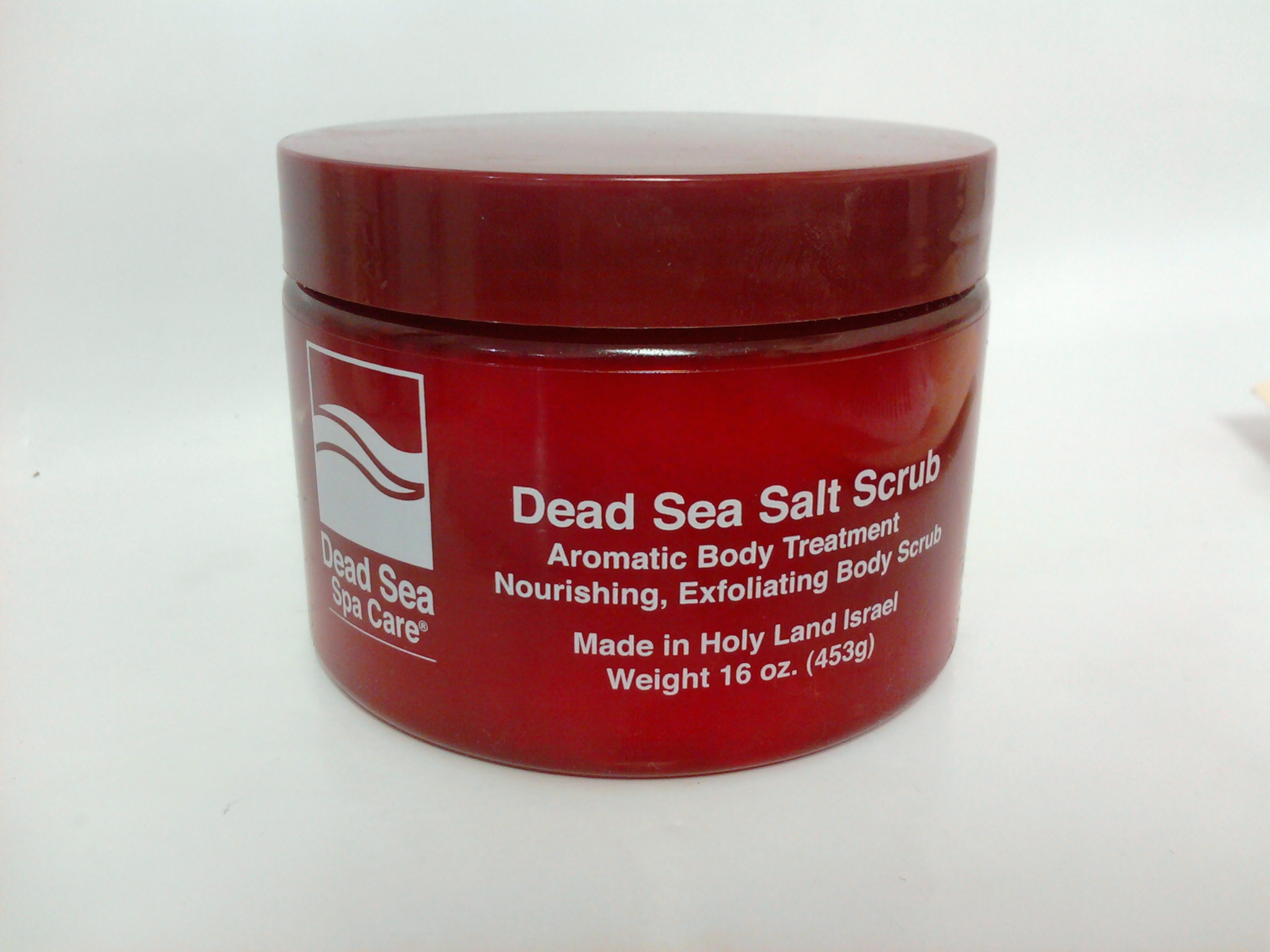
Salt scrubs carry a mineral payload that sugar doesn't. They're rich in magnesium, calcium, and potassium. Dead Sea salt in particular has a distinctive mineral profile - approximately 21 minerals in total, of which roughly 12 are considered unique to the Dead Sea, including notably high concentrations of magnesium, potassium, calcium, and bromide not typically found at those levels in ordinary sea salt. Salt also has natural antibacterial properties, making it a solid choice for body acne on the back and shoulders. The granules are coarser - better suited to normal or oily skin that isn't currently sensitized. Salt on freshly shaved or reactive skin will sting, which is one reason the 24-hour prep rule below matters.
Coffee
Caffeine is a vasoconstrictor: it temporarily tightens blood vessels and reduces surface puffiness. That's the mechanism behind coffee scrubs being used to temporarily smooth the appearance of cellulite. The effect doesn't change underlying tissue permanently, but the combination of vasoconstriction and exfoliation makes skin look noticeably more even for a period after treatment. Medium-coarse grit, works well on thighs, upper arms, and anywhere texture is the primary concern.
Specialty Formulas
Most spas offer scrubs built around botanical enzymes, essential oils, or herbal powders layered over one of the three bases above. These blends often target specific goals - brightening, calming inflammation, or preparing the skin for a wrap to follow. When asking about grit: fine granules suit sensitive skin; a coarser grind works harder on rough patches like elbows, heels, and knees. Ask the therapist to match the grit level to your specific concerns before the session begins rather than assuming the default will suit you.
Body Wrap Types: Seaweed, Mud and Clay, Herbal, and Hydrating Wraps
Where scrubs work on the surface, wraps work through it - using heat, mineral transfer, or drawing action to address the skin and in some cases the tissue beneath it.
Seaweed
Seaweed contains minerals at concentrations many times higher than land-based plants, including iodine, magnesium, iron, potassium, phosphorus, and calcium. It also contains bioactive compounds - fucoidan and alginate - with documented anti-aging and wound-healing properties in cosmetic research. When seaweed is applied with heat in a wrap, skin permeability increases, which may support absorption of some of those mineral and bioactive compounds - a property widely cited in balneotherapy and spa settings, though the degree of transdermal uptake varies by ingredient and individual. Seaweed wraps are a strong choice for mineral replenishment, anti-aging focus, and overall skin nourishment.
Mud and Clay
Mud and clay wraps - commonly formulated with bentonite clay, kaolin, or volcanic ash - work through adsorption: toxins and excess sebum bond to the clay's negatively charged surface and are lifted away when the mud is removed. This makes mud and clay the right choice for oily, congested, or acne-prone skin and for anyone who wants a deep pore-clearing effect. The sensation is heavier and more compressing than other wraps, and the cooling clay creates a mild pulling sensation as it dries - most clients find it deeply satisfying.
Herbal
Herbal wraps use warmed linens or bandages infused with plant-based botanicals chosen for calming or anti-inflammatory properties. Heat is the primary mechanism - it relaxes the body, supports circulation, and opens the skin to absorb the herbal actives. A good option when relaxation is a primary goal alongside skin benefit, or when the skin isn't suited to the mineral intensity of seaweed or the drawing action of clay.
Hydrating
Hydrating wraps deliver moisture-binding ingredients - shea butter, plant oils, emollient-rich creams - directly into skin that has been prepped by a prior scrub. The wrap seals those ingredients against the skin under heat for 20 to 40 minutes. For very dry, flaky, or environmentally stressed skin, the resulting moisture saturation exceeds what any at-home moisturizer delivers in a single application. The immediate softness after rinsing is noticeable, and with proper aftercare the effect can persist for roughly a week.
Scrub vs. Wrap: A Decision Guide by Skin Goal
If you're working from a specific concern, here's how to match it to the right treatment:
- Rough texture, bumpy skin, or general dullness: Start with a scrub. Physical exfoliation is the most direct tool for surface irregularity, and a single professional scrub produces visible results in one session.
- Persistent dehydration, tightness, or flaking despite daily moisturizer: A hydrating wrap addresses the problem at a depth that surface exfoliation alone can't reach.
- Oiliness, congestion, or body acne: A salt scrub followed by a mud or clay wrap covers both angles - exfoliating the surface while drawing congestion from pores.
- Cellulite appearance and uneven tone: A coffee scrub paired with a seaweed wrap addresses both temporarily. The caffeine tightens surface vessels while seaweed minerals support overall skin tone.
- Pre-event glow with maximum impact: The combination of scrub followed immediately by wrap, described in detail below. A cleared surface absorbs far more from the wrap, and the combined effect on smoothness and radiance is noticeably stronger than either treatment run separately.
- Relaxation with skin benefit and minimal intensity: An herbal wrap, with or without a prior scrub, is the calmest of the options - closer in feeling to thermal therapy than to a clinical treatment.
The Combination Treatment: Why Scrub Then Wrap Is the Professional Standard
The sequencing isn't arbitrary. The stratum corneum - the dead-cell layer covering the skin's surface - blocks ingredient absorption. Once it's cleared by a scrub, wrap ingredients make direct contact with living tissue rather than sitting on top of a cellular barrier. This is why performing a body scrub immediately before a wrap is the professional standard: the absorption and hydration benefit of the combined sequence is meaningfully greater than what either treatment delivers alone.
A combined session typically runs 60 to 90 minutes. You'll spend the first portion having the scrub applied, worked in, and rinsed. Wrap ingredients are then applied to the freshly exfoliated skin, and you're cocooned in warmed linens for 20 to 40 minutes. A final rinse and finishing lotion application close the session. When booking, ask specifically about combination packages. Some spas list these as a single service; others build them from two sequential bookings. Either way, confirm that the scrub comes first - that order is what produces the result.
How to Prepare for Your Appointment
The single most important preparation step is avoiding shaving or waxing for 24 hours before any scrub or wrap. This has a specific reason. Shaving and waxing create micro-abrasion along the skin's surface - the same surface that will shortly have exfoliating granules and active ingredients worked into it under pressure. Sensitized, freshly cleared skin reacts to that combination, and the reaction is uncomfortable. The 24-hour window allows full recovery. Shave the day before, not the morning of.
Hydrate well in the hours before you arrive. A wrap generates heat and perspiration; arriving already mildly dehydrated reduces both comfort and the rehydration benefit of the treatment. Eat a light meal beforehand - don't arrive immediately after a large meal, but don't walk into a 90-minute session running on empty either.
Arrive without heavy body lotion or oil on your skin, as these interfere with scrub contact and wrap absorption. Skip perfume. Bring loose, comfortable clothing to change into afterward - tight waistbands immediately after exfoliation and thermal treatment are genuinely uncomfortable, and finishing lotion may not be fully absorbed before you dress.
If you're currently using prescription retinoids or benzoyl peroxide on your body, flag it when booking. Both compromise the skin barrier, and body scrubs are contraindicated on skin treated with either. Active eczema or psoriasis flares, sunburn, and open wounds are also contraindications - a therapist will work around affected areas or recommend rescheduling if needed. Surfacing these details at booking, rather than on the table, gives the therapist time to adjust the plan.
What to Expect: Step by Step from Arrival to Rinse
First-timers are most often uncertain about the practical details - how undressed you'll actually be, what the draping involves, whether the process is awkward. The reality is more routine than the menu suggests.
After intake and a brief consultation on your skin goals and any contraindications, you'll move to a private treatment room. Most body treatments are performed without clothing, but you remain fully draped with linens at all times, with only the section being actively worked on uncovered. Draping is deliberate and maintained throughout the session.
The scrub is applied in sections - typically starting with the back and working systematically around the body. The therapist uses even pressure calibrated to your skin's sensitivity: firmer on rough zones like the back of the arms and heels, lighter on the stomach and inner arms. This phase takes 20 to 30 minutes in a full combined session. You'll rinse - either at a wet table or in a private shower - before the wrap begins.
Wrap ingredients are applied to the freshly rinsed skin, then you're cocooned in warmed linens, sometimes with a foil layer to retain heat. The temperature inside the wrap is warm and enveloping. This is the resting phase, and most clients find it deeply relaxing - some fall asleep. The therapist may offer a scalp massage or brief face treatment during this time, or you simply rest for 20 to 40 minutes. After the wrap, you rinse, and a finishing lotion or oil is applied before you dress.
Aftercare and How Often to Book
What you do in the 24 to 48 hours after your session significantly affects how long the results last.
Avoid caffeine and alcohol for at least 24 hours after a wrap. Both are diuretics. A wrap works in part by promoting skin rehydration, and diuretics actively pull water from tissue, directly undoing that effect. This isn't a general wellness caution - it's a specific physiological reason. The same logic applies to heat: hot showers, saunas, and strenuous exercise in the 24 to 48 hours after treatment continue the thermal process in an uncontrolled way and reduce the absorption window you worked to create.
After a hydrating wrap specifically, skip a shower that evening if you can manage it. Ingredients left on the skin continue absorbing for hours after you leave. Rinsing the same night cuts that process short. Waiting until the following morning - applying a light moisturizer before bed if needed - extends the hydration benefit in a way that adds up noticeably by morning.
For ongoing skin maintenance, therapists recommend booking every two to four weeks. Monthly appointments align with the skin's natural 28 to 40-day renewal cycle, meaning you're clearing the dead-cell backlog at roughly the same pace the skin produces it. After age 50, when cell turnover slows, moving to every two to three weeks maintains the benefit more consistently than a once-a-month schedule.
Between sessions, consistent moisturizing is what holds the result. A professional treatment resets the surface; daily moisturizer maintains that reset until the next appointment. Used together, the two deliver more than either does on its own.