
Most people pick a massage by name recognition alone - "Swedish sounds gentle, deep tissue sounds serious" - and book without knowing what to expect. The result is often a mismatch: someone tense from a stressful month books aromatherapy when deep tissue would help, or a first-timer books deep tissue and ends up sore and put off. Here is a goal-by-goal breakdown to help you decide before you walk in.
Goal: Relaxation, or You Have Never Had a Massage Before
Choose Swedish
Swedish massage is the foundation of Western bodywork. The five core strokes - effleurage, petrissage, tapotement, friction, and vibration - were systematized in the 19th century by Johann Georg Mezger, a Dutch physician who gave the technique its clinical vocabulary; those strokes still anchor every massage therapist's training today. Per Henrik Ling, a Swedish fencing master and gymnastics teacher, developed a parallel program of therapeutic movement called the Swedish Movement Cure, and the two traditions became intertwined over time. The lighter character of these strokes matters: they warm and prepare the tissue. Applying deep pressure to unprepared muscle is not safe practice, which is why established spas consistently direct first-time guests to book Swedish before anything else.
The relaxation benefit is also clinically documented. A 2013 study in Evidence-Based Complementary and Alternative Medicine found that Swedish massage produced a statistically significant drop of 12 mmHg systolic and 5 mmHg diastolic blood pressure in hypertensive women after four sessions - a measurable cardiovascular change, not just a feeling.

Goal: Chronic Tension, Knots, or Lingering Muscle Pain
Choose Deep Tissue
Deep tissue targets the fascia and deeper layers of the muscle belly rather than surface tissue. Therapists use slow, cross-fiber strokes and sustained pressure to break down chronic adhesions. Be ready for one thing most pages don't mention: mild soreness in the 24-48 hours after your session. It mirrors post-workout muscle soreness and is a normal response, not a sign something went wrong. Set that expectation before you book, not after.
Deep tissue is not right for everyone. A recent injury or blood-thinning medication are reasons to talk to your doctor first. Tell your therapist about either before the session starts.
Goal: Deep Relaxation Without Intense Pressure
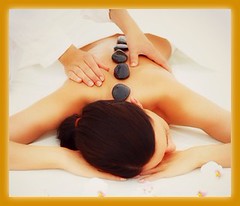
Choose Hot Stone
Basalt - a dense volcanic rock - is the stone of choice because it holds heat exceptionally well, staying warm for the full session without needing to be reheated. Therapists place the heated stones along the body's tension points; heat penetrates the muscle before manual work even begins. The result reaches deeper than lighter hand pressure can on its own.
Hot stone is not suitable for everyone. Guests who are pregnant, have varicose veins, or manage diabetes should avoid it - the concentrated heat creates circulatory demands that can be unsafe in those cases. Ask your therapist about alternatives if any of those apply to you.
Goal: Anxiety Reduction
Choose Aromatherapy Massage
Lavender is the most rigorously studied aromatherapy ingredient. Clinical research across multiple settings - including pre-surgical wards, dental offices, and generalized anxiety disorder treatment - consistently finds that it reduces anxiety. The reason it works quickly is anatomical: scent molecules travel via the olfactory nerve directly to the limbic system, the brain's emotional-processing center, bypassing slower cognitive pathways. That direct route is why a scent can shift your state within minutes - faster than any topical application alone. Most descriptions just say oils "promote relaxation." The actual mechanism is more specific than that.
Goal: Athletic Recovery or Pre-Event Preparation
Choose Sports Massage
Sports massage is structurally close to deep tissue, but it is the only modality where the client actively participates. Your therapist may ask you to resist a movement, flex into a stretch, or breathe through a hold - engagement that gives access to movement patterns passive work cannot reach. Research into massage and autonomic recovery in athletic populations is active; for current evidence, search peer-reviewed databases using terms like "massage," "cortisol," and "athletic recovery."
If this is your first visit, start with Swedish. Once your body knows what massage feels like, you can layer in hot stone, aromatherapy, and eventually deeper work as your sessions accumulate.